
Liposuction in Dubai
Liposuction is a surgical procedure that removes localised fat deposits through a thin suction cannula, reshaping areas that have not responded to diet and exercise. It is a contouring procedure — not a treatment for obesity or weight loss — and it does not remove cellulite or stretch marks.
Last updated September 2026 · Consultation at our Dubai clinic is free
Key facts at a glance
The questions patients ask before booking, answered in one place.
Areas commonly treated
Liposuction is area-specific. Which of these is appropriate depends on fat distribution and skin quality, assessed in person.

What liposuction can and cannot do
Being straightforward about the limits matters more than a list of benefits.
What it can do
- Reduce localised fat pockets that resist diet and exercise
- Improve the contour and proportion of a treated area
- Address more than one area in a session, if assessment allows
- Produce long-lasting change, provided weight stays stable
What it cannot do
- Reduce body weight meaningfully, or treat obesity
- Remove cellulite or stretch marks
- Tighten significantly loose or sagging skin
- Replace diet and exercise, or prevent future weight gain
How liposuction is performed
- Assessment and planningYour BMI, skin elasticity, fat distribution, medical history and current medication are reviewed to decide whether surgery is appropriate and which approach suits you.
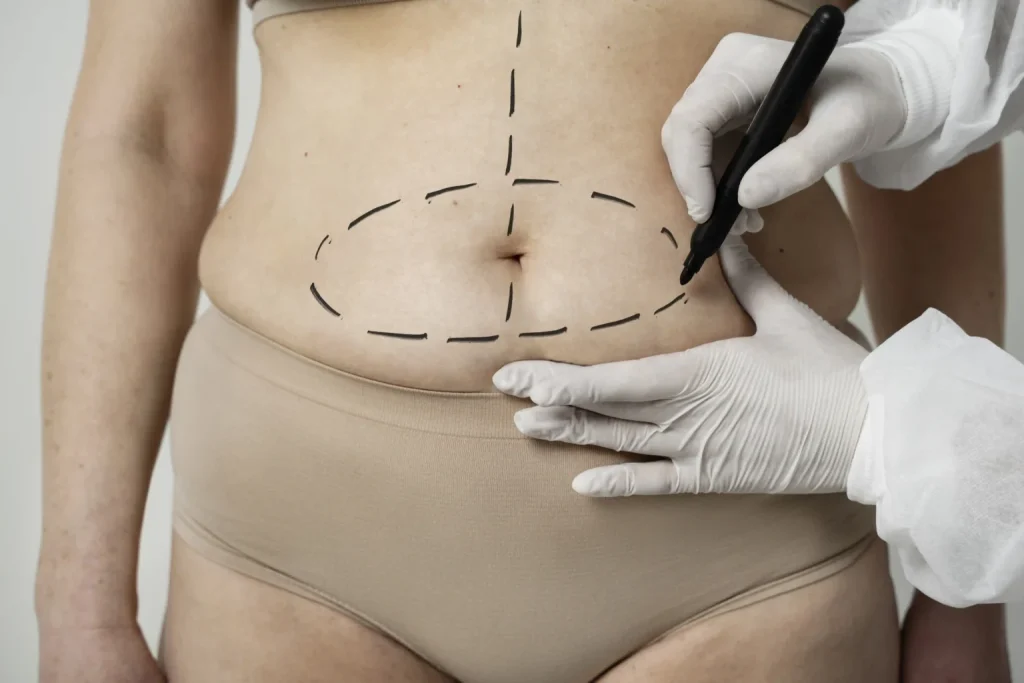
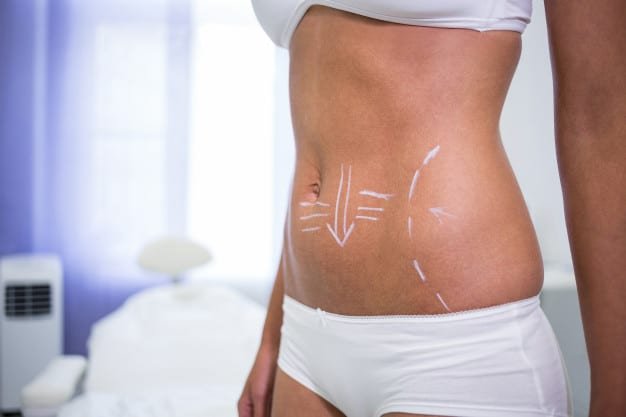
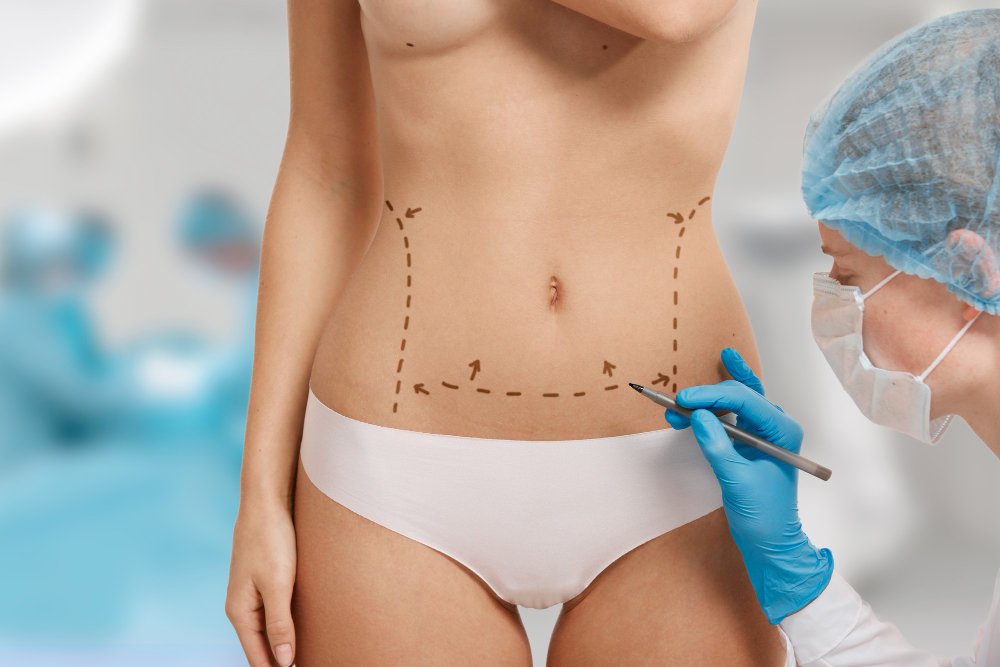
- MarkingTreatment areas are mapped while you are standing, so the plan reflects how fat actually sits on your frame.
- AnaestheticA general anaesthetic is usual; an epidural may be used for lower-body areas.
- InfiltrationA fluid containing local anaesthetic and adrenaline is injected to numb the area and limit bleeding.
- Fat removalFat is loosened and drawn out through a fine cannula passed through small incisions.
- Closure and compressionIncisions are closed and a compression garment is fitted to support the new contour and control swelling.
- Follow-upReview appointments track healing, swelling and the settling contour.
Who liposuction suits
Usually a reasonable candidate
- At or near a stable, healthy weight
- Localised fat out of proportion with the rest of the body
- Reasonable skin elasticity
- A non-smoker, or willing to stop before and after surgery
- In good general health, with realistic expectations
Usually not suitable
- Looking for weight loss rather than contouring
- Marked skin laxity with no skin-tightening plan
- Uncontrolled diabetes, heart or clotting conditions
- Pregnant or breastfeeding
- Unable to commit to the recovery restrictions
Recovery week by week
| When | What to expect | Activity |
|---|---|---|
| Days 0–2 | Bruising, swelling and soreness; some fluid leakage from incisions | Rest; garment worn continuously |
| Week 1 | Stitches removed around one week; bruising begins to fade | Short walks |
| Weeks 2–3 | Swelling starts to settle; numbness is common | Desk work often resumed, depending on extent |
| Weeks 3–4 | Shape beginning to emerge under residual swelling | Gentle exercise may resume |
| Weeks 6–8 | Contour increasingly apparent | Garment use tapers as directed |
| Weeks 10–12 | Most swelling resolved | Strenuous exercise and heavy lifting generally cleared |
| Up to 6 months | Final contour as the last swelling resolves | No restrictions |
Risks and limitations
Liposuction is surgery, and surgery carries risk
Setting out complications plainly is part of informed consent, not a deterrent. Reported risks include:
- Common: bruising, swelling, numbness, scars, inflammation of the treated area, fluid discharge, swollen ankles
- Less common: lumpy or uneven results, bleeding under the skin, persistent numbness, changes in skin colour
- Serious but uncommon: pulmonary oedema, blood clots, damage to internal organs
- General surgical risks: excessive bleeding, venous thromboembolism, infection, reaction to anaesthetic
Seek urgent medical help for breathlessness, chest pain, a hot swollen leg, spreading redness or fever after surgery.
What affects the cost of liposuction in Dubai
A single advertised figure rarely reflects what a given operation involves. These are the variables that move the quote.
Consultation is free. A written quote is given after examination, because suitability and the plan have to be established first. Be cautious of a fixed price quoted before anyone has examined you, and ask what is excluded as well as what is included.
How common is liposuction?
Questions patients ask
Is liposuction a weight-loss treatment?
Will the fat come back?
How soon can I go back to work?
Does liposuction tighten loose skin?
Will I have scars?
How much fat can be removed in one session?
Can liposuction treat cellulite?
Is the procedure painful?
How long before I see the result?
Sources
- NHS — Liposuction: procedure, recovery timeline and complications.
- ISAPS — Global Survey 2023 and Global Survey 2024: worldwide procedure volumes.
Book a free assessment
Suitability for liposuction can only be judged in person, with an examination of fat distribution and skin quality.