Liposuction swelling stages describe the broad sequence of fluid and tissue changes after surgery. This overview is educational, and its stages are not a substitute for the surgeon’s written instructions. Readers can review the clinic’s procedure page for treatment context while using the discussion below to prepare realistic recovery questions.
Direct Answer: How Does Swelling Change After Liposuction?
Swelling is a normal response to tissue injury after fat removal and can change during the first days, weeks and months. The familiar description of liposuction swelling stages is only a broad framework, not a timetable that predicts exactly when an individual body will look smooth or feel comfortable. The area treated, volume of fat removed, skin elasticity, operation technique, medical history and postoperative care all influence recovery.
The American Society of Plastic Surgeons describes continued swelling and gradual changes in contour as part of healing. A patient should expect written instructions about movement, garment use, incision care and follow-up. Increasing pain, rapidly worsening asymmetry, fever or spreading redness are not problems to manage by tightening a garment. They deserve clinical assessment. The point of understanding stages is to ask better recovery questions, not to diagnose a complication from an online timeline.
Why Swelling Happens in the First Place
Liposuction removes selected fat deposits through small access points using a cannula. Understanding liposuction swelling stages begins with recognising that tissue disruption during surgery triggers inflammation and fluid movement into the treated area. This can produce puffiness, tenderness, bruising and a feeling of firmness. The appearance in a mirror shortly after surgery may therefore be very different from the longer-term contour. It is tempting to assume that all swelling indicates retained fat or poor technique, but early postoperative shape cannot be interpreted so simply.
The surgical team assesses whether the amount and distribution of swelling are appropriate for the procedure. Swelling is also influenced by posture, activity, garment fit and the degree of tissue disruption. Two people receiving treatment in the same body region can have different recovery experiences. A clinic should explain what change is expected and which deviations need examination, rather than promising a fixed date for a final result.
The First 24 to 48 Hours
The earliest of the liposuction swelling stages may involve swelling, bruising, incision drainage or tightness, depending on the surgical technique and individual care plan. A surgeon may recommend dressings and a fitted compression garment while providing guidance on moving safely and taking prescribed medicines. It is important to know which symptoms can be monitored and which justify contact immediately. Uncontrolled bleeding, faintness, severe pain, major breathing symptoms or rapidly progressive swelling require prompt medical assessment.
Patients should have instructions in writing before leaving the clinic and a way to reach the operating team after hours. Do not adjust medication doses or add unapproved compresses because another patient’s experience looked different. The first two days should focus on safety, hydration guidance and appropriate gentle activity when approved—not on trying to judge the aesthetic outcome. Photographs can record the situation but cannot reliably establish whether fluid, bruising or a more serious problem is responsible for an unusual appearance.
Days Three to Seven: Why the Contour Can Look Uneven
During the early liposuction swelling stages, the first postoperative week can feel discouraging because bruising and swelling may remain prominent. A garment can temporarily change the silhouette, and changes in posture or fluid distribution may create local fullness that looks uneven. These observations are not a reliable measure of the final body shape. A patient may also become more mobile, making some swelling more noticeable later in the day than in the morning. The surgical team should explain how to assess comfort and incision healing during routine activities.
Avoid aggressive massage, extreme heat exposure or additional layers of compression unless the surgeon specifically recommends them. An uneven-looking photograph is not automatically a reason for alarm, but a rapidly expanding lump, worsening tenderness or signs of infection deserve prompt review. This distinction is especially important for patients who travelled to Dubai and need a realistic follow-up plan before returning home.
| Key consideration | What the article explains |
| Weeks Two and Three: Mobility Improves Before Swelling Ends | During the second and third weeks of liposuction swelling stages, everyday movement may become easier even though the treated tissues have not fully settled. |
| Compression Garments and Swelling Management | Surgeons commonly prescribe postoperative compression garments to provide support during recovery, but the precise effect and optimal wear schedule vary with the procedure. |
| Body Area Differences: Abdomen, Flanks, Thighs and Arms | Swelling behaves differently in regions with different anatomy and movement patterns. |
Weeks Two and Three: Mobility Improves Before Swelling Ends
In many patients, everyday movement becomes easier before the treated tissues have fully settled. Bruising may fade while residual swelling and firmness remain. A person who feels well enough to return to office work may still have restrictions on strenuous exercise or lifting. Ask the surgeon how activity should increase, whether the garment remains necessary and what symptoms signal overexertion.
Driving may also depend on discomfort, mobility, and any medicines that impair alertness. Recovery does not have a single switch that moves from ‘swollen’ to ‘fully healed’ on a scheduled day. Mild fluctuations can occur, but worsening rather than improving symptoms require assessment. The relevant comparison is the trend across appropriately spaced visits, not a fixed claim found in an advertisement. Clinician-directed care should be based on the actual surgery and the patient’s health rather than a universal stage chart.
Weeks Four to Six: What Can Still Be Changing?
In the later liposuction swelling stages, some patients notice reduced puffiness while small firm areas and gradual contour changes may still be present. These findings may reflect the longer healing process, and the surgeon can determine whether an observed irregularity is within expected recovery. Compression instructions may be revised as swelling changes, but patients should not stop or intensify garment wear independently simply because they have reached a calendar milestone.
People sometimes think that persistent firmness must be permanent scar tissue, but the appearance and feel of tissue need clinical context. Ask whether a particular concern should be observed, photographed or examined sooner. A follow-up is also an opportunity to discuss physical activity, clothing discomfort and safe skin-care products. Recovery can continue beyond this interval, especially in larger or multiple treated regions. Resist comparing results against a gallery image taken many months after somebody else’s operation.
Months Two and Three: Patience and Observation
When reviewing liposuction swelling stages over the second and third months, patients should not assume that the disappearance of visible bruising means healing is complete. The American Society of Plastic Surgeons explains that contour may continue improving over time as swelling diminishes. Patients should ask when their own surgeon expects a useful review of the result, given the body areas treated and any complicating factors. Taking photographs at consistent intervals can help show change, but lighting, posture, clothing and differences in weight can obscure comparison.
A persistent lump or disproportionate swelling should not be self-diagnosed as fibrosis without an examination. Likewise, a smoother appearance during one week is not proof that no later change will occur. Keep attention on healthy recovery, appropriate movement and open communication with the clinical team. If the body contour remains concerning, obtain a professional assessment instead of chasing unverified massages or devices promoted as guaranteed solutions.
Longer-Term Contour Changes
Understanding liposuction swelling stages also means recognising that long-term body contour depends on more than swelling alone. Skin elasticity, remaining fat distribution, tissue response, weight stability and the original surgical plan all affect the eventual contour. Even when postoperative swelling has largely settled, liposuction does not prevent future weight gain or guarantee that skin will become completely tight. A patient with significant skin laxity may have different expectations from someone with relatively elastic skin.
The appropriate time to evaluate a result should be explained during consultation and refined at follow-up. If a patient is dissatisfied, ask what aspects may still change and what aspects represent the underlying tissue or surgical outcome. There is no reason to promise a particular percentage of swelling reduction by a date when the individual’s baseline has not been measured. Thoughtful reassessment is more useful than describing the recovery as a sequence of guaranteed before-and-after milestones.
Why One Side May Look Different
Across liposuction swelling stages, treated regions may recover differently because the human body is not perfectly symmetrical before surgery. Posture, gravity, clothing and compression can make one side appear fuller in photographs. However, new marked one-sided swelling can also be a warning sign and must not be dismissed. Ask the surgeon what pattern is expected based on the treated areas, incision locations and extent of surgery. Do not respond to asymmetry by adding a foam pad or tightening one side of the garment without instruction.
Such changes can create uneven pressure and may irritate healing skin. If discomfort increases or one leg becomes newly swollen, especially with pain, seek appropriate medical review. Breathing difficulty or chest pain requires emergency assessment. The goal is to distinguish ordinary small differences in appearance from symptoms that warrant urgent evaluation, not to guarantee symmetrical healing.
Compression Garments and Swelling Management
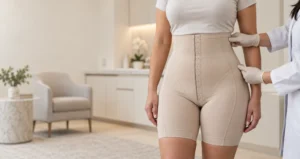
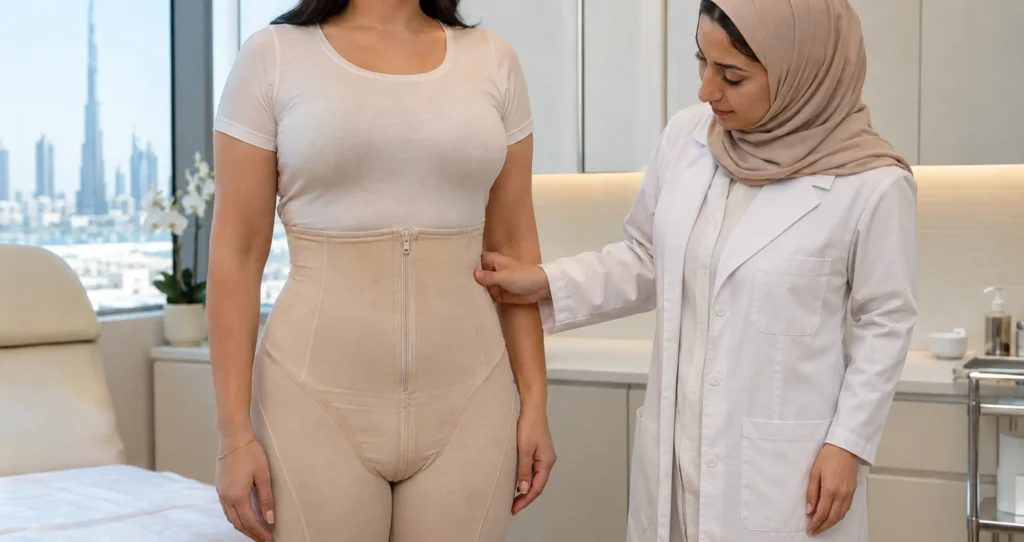
Throughout liposuction swelling stages, surgeons may prescribe compression garments for postoperative support, although their effects and recommended wear schedules depend on the procedure. A garment should be appropriately fitted rather than maximally tight. Rolling edges, deep grooves, tingling, breathing discomfort, or persistent skin irritation can indicate an unsuitable fit. Ask whether the garment may be removed for bathing and whether a second garment is needed for washing.
Compression does not eliminate all swelling, cure every contour irregularity, or replace strategies for preventing blood clots. Patients should not add tight waist trainers or multiple layers without the treating team’s approval. As swelling changes, fit may need reassessment. Discuss this during follow-up instead of selecting a smaller size automatically. The proper question is whether the garment supports the individual recovery plan, not whether a more restrictive item would achieve faster cosmetic results.
Walking, Circulation and Safe Activity

Early gentle walking may be part of postoperative advice, but the timing and amount depend on the patient’s condition and surgeon’s plan. Movement can be helpful for general recovery and reducing prolonged immobility, while vigorous exercise too early may increase discomfort. Cosmetic compression garments are not a substitute for individualized blood-clot risk assessment or any prescribed prevention strategy.
If medications affecting clotting are part of the plan, follow the prescribing clinician’s directions. Ask separately when desk work, stair climbing, longer walks, resistance training, and sport can resume. Some people will need extra help at home or modifications to work. Do not force activity in response to a calendar chart. Serious symptoms such as chest pain, breathlessness, collapse, or marked new leg swelling require urgent medical assessment, not a change to exercise or garment routine.
Incision Care and Fluid Drainage
Some postoperative techniques may involve temporary drainage from small incisions. The team should explain what colour and quantity are expected, how to keep dressings clean and when drainage becomes abnormal. A patient should not attempt to seal openings with unapproved adhesive or repeatedly squeeze fluid from the area. Changes such as pus-like discharge, spreading redness, unusual odour, fever or rapidly worsening pain should trigger contact with the surgeon. If a drain was placed, specific care instructions are needed; a generic blog cannot replace them.
Maintaining clean, dry dressings and observing wound condition are different tasks from checking the final body contour. A photograph of a healing incision may help a remote consultation, but clinically significant symptoms can require in-person examination. Keeping the postoperative contact number readily available is especially valuable when recovery takes place outside the city where the surgery was performed.
Bruising Versus Swelling
When reviewing liposuction swelling stages, it is important to distinguish bruising from swelling because they involve different processes. Bruising reflects blood leaking into the tissue after small blood vessels are disturbed, while swelling is a broader increase in tissue fluid and inflammation. Bruise colour may change over time, whereas swelling can fluctuate with activity and body position. The extent of either should be interpreted in the context of the procedure. A bruise fading does not automatically mean the area is no longer swollen, just as a swollen region does not prove that ongoing bleeding is present.
Ask the surgeon what changes are expected and what symptoms, including worsening pain or rapidly spreading discoloration, require review. Avoid products that promise to erase all bruising and swelling immediately. Some skin treatments or vigorous rubbing may irritate recovering tissue. Simple monitoring and appropriate clinical review are more trustworthy than treating colour as a precise measure of healing.
Firmness, Lumps and Concerns About Fibrosis
During liposuction swelling stages, patients may notice firm or lumpy-feeling areas and worry about fibrosis or an unsatisfactory result. Tissue remodeling after surgery can involve temporary changes in texture, but an online article cannot determine whether a particular lump is expected swelling, a fluid collection, scarring or something else. The appropriate next step is assessment by the operating surgeon, especially when a change is painful, enlarging or accompanied by redness.
Avoid forceful massage and unregulated devices without clinical direction. Even when massage is recommended in a specific postoperative plan, the technique and timing should be individualised. A responsible surgeon should explain what will be monitored and when an intervention might be considered. The fact that a firm area does not disappear overnight does not prove a permanent defect; conversely, a rapidly worsening area should not be ignored because a generic timeline predicts ‘normal lumps’.
Body Area Differences: Abdomen, Flanks, Thighs and Arms
Swelling behaves differently in regions with different anatomy and movement patterns. Abdominal skin folds with sitting and bending, the thighs experience friction during walking, and arms are often raised or used throughout the day. Compression garments must match these differences to avoid concentrated pressure. Recovery instructions may also change when more than one area is treated in a session.
A person who had small-volume flank treatment should not copy the full activity plan of someone who underwent extensive abdominal or thigh surgery. Ask about the total operation, any additional procedures and the incision locations. This is also why a single chart of liposuction swelling stages can inform expectations but cannot determine precise activity milestones. Individual anatomy and procedure details need priority over online comparisons.
Dubai Weather, Heat and Swelling
During the swelling stages, Dubai’s heat can make postoperative compression garments uncomfortable and may increase perspiration. Outdoor travel, air-conditioned workplaces and prolonged sitting can influence daily comfort, but heat exposure cannot be assumed to explain every new swelling pattern. Plan practical clothing and rest arrangements, and ask how to keep garments and dressings clean in warm weather. If activity in the heat causes dizziness, significant weakness or worsening symptoms, seek appropriate advice instead of enduring discomfort.
A person returning to outdoor work may require a different schedule from somebody doing remote desk work. Hydration should follow the medical plan, particularly if other conditions or medications affect fluid requirements. Avoid applying heat packs or undertaking sauna sessions to ‘melt swelling’ without approval. The correct response to a concerning change is medical review, not an environmental explanation invented from a general article.
Travel and the Risk of Prolonged Sitting
Patients travelling to Dubai for surgery should discuss flight timing and recovery support before booking. Long trips can involve prolonged immobility, limited opportunities to adjust a garment and difficulty accessing the original surgeon if symptoms arise. A clinician should evaluate whether and when travel is appropriate based on the operation and individual clotting risk.
Walking through the airport or wearing shapewear is not proof that flying immediately after surgery is safe. Obtain a written postoperative plan, medication instructions and contact details. If complications develop after returning home, an in-person clinician may be necessary. Travel scheduling should remain flexible enough to allow essential follow-up. Symptoms such as chest pain, significant breathlessness or sudden one-sided leg swelling require urgent assessment wherever the patient is located.
Comparing Photographs Responsibly
Before-and-after comparisons can be informative when taken at appropriate intervals with consistent lighting, camera angle, body position and clothing. Photographs taken during liposuction swelling stages may reflect temporary swelling rather than the final settled body contour. An image taken immediately after removing a compression garment can display temporary pressure marks. Patients should avoid comparing their own first-week photograph with somebody else’s six-month advertising result.
Changes in weight and posture also affect apparent shape. A clinic may recommend standardised images at particular follow-up visits to document progress. Use photographs to ask specific questions rather than to prove a result is defective or perfect. If a new area becomes acutely painful or swollen, do not postpone clinical review to obtain better photography. The safety assessment matters more than any aesthetic comparison.
Questions to Ask at Follow-Up
Ask what proportion of current fullness the surgeon believes is postoperative swelling and what cannot yet be determined. Request a clear explanation of garment wear, showering, skin care and activity restrictions. Ask whether localised firmness or unequal appearance merits observation or another examination. Find out when a meaningful result assessment will be possible and which symptoms require immediate contact.
If travel is planned, confirm whether an in-person review is necessary before departure. Patients may also want to ask how weight changes, skin elasticity, and future pregnancies could affect appearance. Written instructions are useful because it is easy to forget details when soreness or anxiety is present. A responsible visit should acknowledge uncertainty where it exists, rather than providing an invented numerical swelling percentage or a cosmetic guarantee.
Frequently Asked Questions
Does all swelling disappear in two weeks?
No. Recovery varies and tissue changes may continue for months.
Can a tighter garment make swelling resolve faster?
More pressure is not automatically better and can cause problems if the fit is wrong.
Is bruising the same as swelling?
No. Bruising involves blood beneath the skin, while swelling reflects inflammation and fluid changes.
Can I use massage to remove every lump?
Do not begin forceful massage without the surgeon’s approval and assessment.
Is uneven swelling always a complication?
Not necessarily, but new or rapidly worsening asymmetry warrants medical advice.
When can I fly after liposuction?
The operating surgeon should evaluate the procedure and individual risks before travel.
Can swelling indicate a blood clot?
Some concerning patterns require prompt assessment; sudden breathlessness or chest pain is an emergency.
Will final results be visible immediately?
No. Early contour is influenced by healing and swelling.
Final Perspective: A Framework, Not a Deadline
Understanding liposuction swelling stages can help patients develop realistic recovery expectations, recognise concerning changes and arrange timely follow-up. Early puffiness, bruising, later firmness and gradual contour changes do not form a guaranteed schedule for every patient. The operation’s extent, skin characteristics, individual health and surgeon’s techniques all affect how recovery progresses.
A compression garment may be one element of care, but it is not an instant contour correction device. Gentle approved movement, wound care, sensible travel plans and medical review matter as much as photographs. If symptoms grow worse rather than improve, or if serious warning signs appear, seek appropriate assessment promptly. The goal is safe healing with realistic expectations, not meeting a promotional promise that swelling will be gone on a particular date.
For a related but separate topic, Tunio also has a broader liposuction procedure overview. This link provides context and should not replace individualised postoperative instructions.
For a related but separate topic, Tunio also has a body-contouring procedure considerations. This link provides context and should not replace individualised postoperative instructions.
For a related but separate topic, Tunio also has a information on different cosmetic procedures. This link provides context and should not replace individualised postoperative instructions.
For a related but separate topic, Tunio also has a anatomical differences in knee liposuction. This link provides context and should not replace individualised postoperative instructions.
CLINICAL SOURCE NOTES
American Society of Plastic Surgeons — Liposuction recovery
American Society of Plastic Surgeons — Liposuction procedure
These references offer general guidance and are not a substitute for an examination of an individual recovering patient. Verify the current URLs and citations before publication.
Keep reading