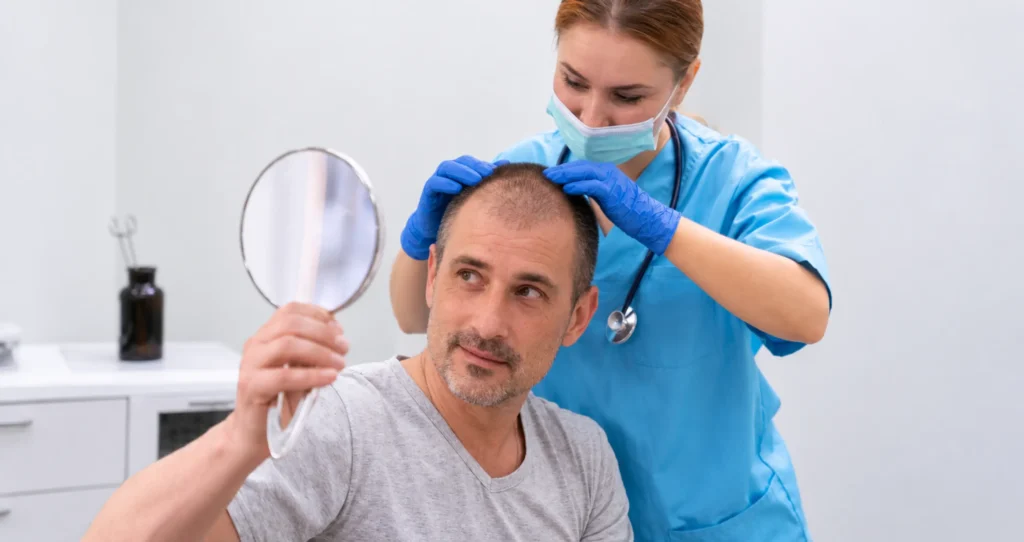
Fue hair transplant scabs is a common description of the tiny crusts that may appear during the early recovery phase. The correct approach depends on whether the crusts are in the donor region or around newly transplanted grafts. For a general overview of the technique, see the relevant service information; this article focuses on safe scab care rather than promising a fixed recovery date.
Direct Answer: Are Scabs Normal After FUE?
Small crusts can form around extraction and implantation sites after follicular unit extraction because tiny wounds are healing. FUE hair transplant scabs are therefore a common early observation, but the way they should be cleaned and the timing of removal must come from the operating surgeon’s own protocol. Scabs are not proof that a graft is growing successfully, and an early scab is not automatically a complication.
The NHS describes temporary scabbing, swelling and tenderness as possible postoperative effects and emphasises careful handling of newly transplanted grafts during the initial two weeks. Do not pick, scratch or forcibly scrub crusts just to meet a cosmetic deadline. Increasing redness, severe pain, foul-smelling drainage, fever or persistent bleeding should prompt medical review. A good aftercare plan distinguishes routine crusting from warning signs and explains what to do if the patient accidentally rubs the area.
Why Tiny Wounds Produce Crusts
FUE involves removing follicular units from a donor area and placing them into small openings at a recipient site. The body responds to these tiny skin injuries with clotting, inflammation and tissue repair. FUE hair transplant scabs form when small amounts of fluid and blood residue dry around the extraction or implantation openings during early wound healing. That is part of surface wound healing, not a separate biological mechanism responsible for new hair growth. The number and appearance of crusts can vary with the procedure, skin characteristics, blood or fluid residue and the care instructions used afterward.
A dense recipient region may look more crusted than a sparsely treated area without proving anything about long-term results. The purpose of cleansing is to support the surgeon’s chosen healing protocol, not to make the scalp look completely clear in a predetermined number of days. A clean appearance should never be pursued at the expense of newly placed grafts.
Donor Crusting Versus Recipient Crusting
There are two different skin situations after FUE. The donor region contains extraction sites, whereas the recipient region contains newly implanted follicular units. FUE hair transplant scabs can develop in both donor and recipient areas, but the surgeon may prescribe different washing techniques and contact precautions for each zone. Confusing the two can lead a patient to scrub recipient skin too vigorously or leave the donor region inadequately cleaned. Ask the clinical team to identify the zones in photographs and provide separate instructions if needed.
Donor scars may eventually remain as tiny dots; recipient wounds have a different appearance and healing purpose. An isolated picture on social media cannot show whether the person was following the correct aftercare for a particular surgery. Use written patient instructions rather than transferring a washing method from one region to another. If there is uncertainty, send a clearly labelled photograph to the clinic for direction.
The First 24 Hours: Protect, Do Not Experiment
The first day is not the time to test shampoo, apply essential oils or remove dried material yourself. Immediately after surgery, patients may be given a dressing or a specific spray or moisture protocol. Follow the directions provided rather than assuming every clinic uses the same products. FUE hair transplant scabs or minor spotting may appear during early recovery, but bleeding that persists or worsens should be reported to the surgical team.
Avoid touching the newly implanted region unnecessarily, and keep hands clean for any approved care. Before leaving the clinic, confirm when the first wash is intended, whether plain water is allowed and how to reach the team if a problem develops after hours. If the procedure included sedation or other medication, follow separate discharge instructions about driving and activity. The key principle is protecting the surgical sites from accidental pressure or friction while allowing healing to begin.
| Key consideration | What the article explains |
| Days Two and Three: The Scalp May Look Worse Before Better | FUE hair transplant scabs may become more noticeable during the first few days, especially under bright lighting or when surrounding hair has been clipped short. |
| When Scabs Persist Longer Than Expected | Healing times vary, and residual crusting does not by itself prove a failed transplant. |
| Products to Avoid Until Your Surgeon Clears Them | A healing scalp is not an ideal testing ground for cosmetic experiments. |
Days Two and Three: The Scalp May Look Worse Before Better
Some patients find that crusts become more obvious over the first days, especially under bright lighting or after the surrounding hair has been clipped short. Mild swelling and tenderness may also be present. That appearance can be concerning without necessarily indicating infection. Look for the overall direction of symptoms: improving comfort and controlled redness differ from pain, warmth or swelling that is increasing rapidly.
Do not use a magnifying phone photograph as the only measure of progress, because zooming can exaggerate small crusts. Patients should resist the urge to scrape away each visible flake. If a prescribed cleansing or spray plan is in place, use it exactly as directed and avoid doubling amounts in the hope of speeding healing. The clinician who performed the operation knows how grafts were placed and can provide the most relevant advice.
The First Wash: Technique Matters More Than Speed
Patients managing FUE hair transplant scabs frequently ask when normal shampooing can safely resume. The NHS provides general recovery milestones, but it is clear that individual instructions should come from the surgeon. Some clinics advise a gentle hand wash after an early period, while others specify a more detailed washing programme. What matters is the approved technique, not copying a day number from an unrelated website.
Avoid directing a strong water jet onto fresh grafts, using fingernails or rubbing with a rough towel unless the team has specifically cleared normal contact. Ask whether the prescribed product should be diluted, whether the scalp should be left to air-dry and how to handle residue around the donor region. If pain or bleeding occurs during washing, stop and contact the clinic rather than forcing the process to continue.
Why Picking Scabs Is a Bad Idea
A crust may look ready to remove while the tissue beneath it is still delicate. Picking FUE hair transplant scabs with fingernails or tools can irritate the skin, trigger bleeding and potentially disturb a recently placed follicular unit. Even if nothing visibly comes out, the action adds unnecessary trauma. Patients sometimes assume that removing every scab is essential for healthy hair growth, but a surgeon-directed cleansing plan should allow the surface to settle gradually without aggressive intervention.
If crusts remain beyond the time expected by the clinic, ask for a photograph review or appointment rather than improvising with chemical peels or hard brushing. Anxiety about appearance is understandable when returning to work, yet the cosmetic desire for a perfectly clean scalp should not override wound safety. Temporary redness or crusting is part of a recovery discussion, not evidence that the operation has failed.
Scab Falling Out Versus a Lost Graft
When FUE hair transplant scabs loosen, a small piece of dried skin or an attached hair does not automatically indicate that a complete graft has been lost. Hairs can shed during the postoperative period, and crusts may contain hair shafts without the entire transplanted follicular structure. At the same time, trauma to an unstable graft early after surgery is a genuine concern, so patients should not dismiss obvious bleeding or a suspected dislodgement without contacting the clinic.
Photographs and the timing of the event may help the operating team assess what happened. Avoid counting tiny hairs in the sink as a way of estimating graft survival; there is no reliable home calculation from washed-off crusts. If a significant incident occurred, ask the surgeon whether any follow-up is needed. Distinguish surface appearance from graft viability and from later growth, which takes months to evaluate.
Redness, Itching and the Normal Inflammatory Phase
Redness and itching can accompany FUE hair transplant scabs during healing, but the severity and progression of these symptoms matter. Mild irritation that settles is different from increasingly painful redness spreading beyond the treated area, especially when associated with warmth, swelling or discharge. A person with sensitive skin may also react to an aftercare product or adhesive. Tell the team what was applied and when symptoms began.
Do not start a steroid cream, antibiotic or antifungal agent over surgical wounds unless prescribed, because such products may interfere with assessment or cause additional irritation. Scratching is particularly tempting as crusts loosen; ask for approved measures if itching is uncomfortable. Photographs in comparable lighting can show the direction of change, though symptoms such as fever or severe pain require direct medical advice. The safest goal is symptom-aware care, not a promise of zero redness.
When Scabs Persist Longer Than Expected
FUE hair transplant scabs may persist for different lengths of time, and residual crusting alone does not prove that a transplant has failed. However, persistent thick crusts, new oozing or an unusual smell should be reviewed by the surgical team. They may need to check the washing technique, skin condition or possibility of infection. Do not respond by repeatedly washing harder or leaving a very strong shampoo in contact with the scalp.
A clinician can distinguish dried residue from more concerning material and determine whether the aftercare regimen should change. If travelling soon after surgery, arrange a follow-up before departure and obtain instructions about whom to contact if symptoms persist abroad. A late or unusual finding deserves a patient-specific answer, not a universal online claim that every scab must detach on exactly the same date. Recovery schedules are practical references, not diagnostic tests.
Crusting and the Longer Hair Growth Timeline
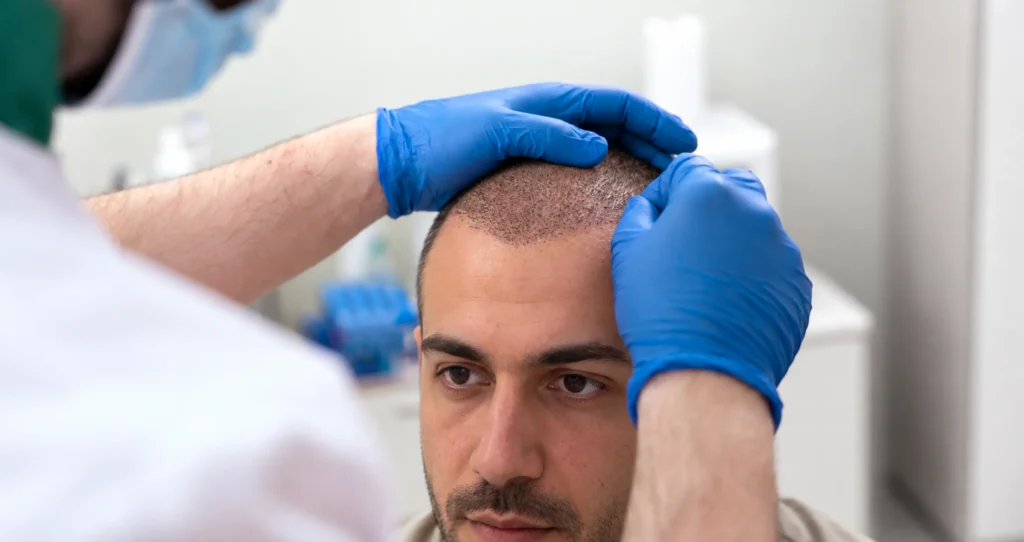
It is important to distinguish the early healing phase of FUE hair transplant scabs from the longer hair-growth phase. Small wounds may close and crusts may loosen relatively early, while visible transplanted hair growth develops on a much longer timeline. The NHS notes that transplanted hairs may shed after the procedure and that visible regrowth can take months. This does not mean a crust must remain in place to protect hair growth for the entire period.
Likewise, a clean scalp during the first fortnight does not guarantee density later. A clinician evaluates recovery, graft placement, underlying hair loss and realistic growth expectations at different appointments. Patients should avoid judging the final result from scab counts or colour changes. This article deliberately focuses on crusting and safe early skin care rather than offering a complete month-by-month transplant result forecast.
Haircuts, Hats and Contact With the Recipient Area
A normal cap or helmet can create friction against the scalp, and changing clothing over the head can also touch newly treated sites. The surgeon should advise when particular types of headwear or haircuts are appropriate. Do not infer that a loose cap is safe simply because crusts appear dry, and do not shave the recipient zone to improve visibility without clinical approval.
If work requires a protective helmet, mention that before surgery so the return-to-work plan addresses it. A patient might need an alternative duty assignment until the scalp can tolerate regular equipment. Soft clothing with a wide opening or front buttons may reduce accidental rubbing when dressing. These precautions are about the specific treatment area and recovery stage; there is no single cap date or haircut rule that applies to every person who undergoes FUE.
Sleeping Without Rubbing the Scalp
People can accidentally contact the pillow or roll onto treated sites while asleep. The surgical team may recommend a position that protects the recipient region and reduces pressure on the donor area, but the instructions should account for the patient’s neck comfort, mobility and other health conditions. An overly rigid sleeping position can create its own problems.
Avoid inventing a fixed number of pillows or a universal number of upright nights from social-media posts. Clean pillowcases and ordinary hygiene can support comfort, while prescribed protection is more important than improvised barriers. If a crust appears on a pillow after waking, photograph the region and ask the clinic whether the appearance warrants review rather than assuming a graft was lost. Bleeding, increasing pain or unusual swelling should not be ignored. Rest is part of healing, not an opportunity to constantly inspect the scalp.
Exercise, Sweat and Dubai Heat
Strenuous exercise, sweating and friction may affect scalp comfort while FUE hair transplant scabs are healing. The NHS notes that patients may be instructed to reduce exercise during early recovery, but the safe timing depends on the operation and individual medical assessment. Ask separately about light walking, gym workouts, swimming and contact sports. A short outdoor commute under
Dubai’s sun is a different situation from vigorous sports training. If sweat causes irritation, do not attempt to wash repeatedly with unapproved products or scrub the crusts off. The team may recommend practical cooling or scheduling measures. Avoid direct intense sun on vulnerable skin and clarify the use of head coverings or sunscreen during different phases. The climate should shape realistic aftercare logistics, not create an excuse to depart from the surgeon’s written instructions.
Products to Avoid Until Your Surgeon Clears Them
A healing scalp is not an ideal testing ground for cosmetic experiments. Hair dyes, oils, fragrances, alcohol-based styling solutions, exfoliants and strong medicated actives may provoke irritation if applied too early. Some products can also leave residue that complicates visual assessment. Use only cleansers and sprays that the clinic confirms are appropriate, and ask when ordinary shampoo or hair-care products can resume. Do not assume that a so-called natural oil is safe for a fresh surgical wound.
Microneedling over recently transplanted areas should never be undertaken independently. If a product causes burning or rash, contact the team and explain the ingredients and timing. A simple aftercare routine is often easier to follow and to audit for side effects than a complicated collection of unverified treatments. Proper wound care is not a contest to use the most products.
How to Recognise a Possible Infection
Although FUE hair transplant scabs are common during healing, infection cannot be diagnosed or ruled out from a single photograph alone. Warning signs can include pain that is worsening rather than settling, redness that spreads, unusual warmth, fever, pus-like discharge or an unpleasant odour. These symptoms deserve prompt evaluation by the surgical team; severe or rapidly progressing symptoms warrant urgent medical assessment. A crusted area can look dark because of dried blood without indicating infection, but dismissing new drainage as ‘normal scabs’ may delay care. Do not self-prescribe antibiotics or squeeze suspicious spots.
When contacting the clinic, provide the operation date, area involved, relevant symptoms and any photos they request. Ask whether an in-person review is needed. Patients who have returned home from Dubai should know where they can access urgent medical care locally, because a video chat may not be enough if a wound is significantly infected.
Photographs That Actually Help the Surgeon
To document crusting, capture the full recipient area and a closer view of any particular concern, ideally in similar light each time. Dry hair and a consistent camera angle reduce misleading variation. Avoid aggressive hair separation, combing or lifting crusts merely to make a clearer picture. A date and description of symptoms can be more useful than a high-resolution image with no context.
If the scalp is painful, explain whether pain is increasing or decreasing. Patients should use secure communication channels approved by their clinic rather than public comments or social-media posts for personal wound images. Routine photographs are helpful at clinician-specified intervals; daily magnified inspections may increase anxiety without changing the care plan. The purpose is to support medical decisions rather than count grafts or rate healing against other patients.
Questions to Ask if You Are Worried About Crusts
Ask whether the appearance fits the healing stage for your own surgery, whether donor and recipient washing instructions differ and whether any product needs to be changed. Find out exactly what to do if a crust loosens during cleaning or if minor bleeding occurs. Clarify what symptoms require a same-day call and which require emergency care. If the clinic provides photographs of expected healing, ask whether they are representative or only one patient’s example.
Before returning to work, discuss helmets, hats, styling and outdoor activity. Obtain written guidance for travel, medication and after-hours contact. Questions can be concise yet specific; a good postoperative conversation does not require patients to memorise complex anatomy. The surgeon’s instructions are the reliable guide for protecting fresh grafts and managing an unusual symptom.
Why the Crust Phase Does Not Define Surgery Success
The temporary appearance of crusts is not a meaningful stand-alone measure of graft survival, final hairline design, donor quality or long-term density. Successful planning involves diagnosis, appropriate donor selection, skilled graft handling, realistic coverage and ongoing management of native hair loss. FUE hair transplant scabs are part of wound healing, and their number or duration may vary for reasons unrelated to eventual cosmetic outcomes. Patients comparing before-and-after photographs should consider hair length, lighting and the month at which each image was taken.
The main concern during the crust phase is to protect the scalp and identify complications promptly. A later follow-up can address graft growth and density, which are distinct questions. Reassurance should be balanced with honesty: early healing often improves, but no surgeon can promise identical outcomes for everyone based only on a tidy scalp.
Frequently Asked Questions About FUE Scabs
Are scabs common after FUE?
Yes, small crusts can occur around healing extraction and recipient sites.
Should I pick dry crusts away?
No. Follow the clinic’s gentle washing protocol rather than forcibly removing them.
Does a hair attached to a crust mean a graft is lost?
Not necessarily; ask the surgeon if there was bleeding or a concerning incident.
Can I shampoo normally in the first week?
The safe technique and date depend on the surgeon’s postoperative instructions.
Can scabs last more than several days?
Yes, timing varies, but persistent or worsening changes deserve review.
Are scabs proof of graft survival?
No. Wound healing and later hair growth are distinct processes.
What if crusts smell unpleasant or produce discharge?
Contact the surgeon promptly for assessment.
Can I wear a hat to hide scabs?
Only when your treating team confirms the type and timing are safe.
Final Perspective: Handle the Scalp Gently
FUE hair transplant scabs can be unsettling, especially when the recipient area remains visible and patients are eager to return to normal routines. Yet the correct goal is careful healing, not rapid forced removal of every visible scab. Follow your own discharge instructions for washing, touching, headwear, sleep and activity.
Recognise that donor and recipient sites may need different care and that the absence or presence of crusts does not predict the final cosmetic result. The NHS emphasises protecting newly implanted grafts during early recovery and contacting the clinic if unexpected symptoms occur. A sensible routine includes gentle approved cleansing, practical protection from friction and prompt communication when discomfort or drainage becomes worse. Individualised surgical advice always overrides an online chart of healing days.
For complementary background on a different question, see Tunio’s guide to the FUE transplant process. This separate resource is not a replacement for the operating surgeon’s individual aftercare instructions.
For complementary background on a different question, see Tunio’s preoperative questions and preparation. This separate resource is not a replacement for the operating surgeon’s individual aftercare instructions.
For complementary background on a different question, see Tunio’s answers to common transplant questions. This separate resource is not a replacement for the operating surgeon’s individual aftercare instructions.
For complementary background on a different question, see Tunio’s earlier explanation of FUE in Dubai. This separate resource is not a replacement for the operating surgeon’s individual aftercare instructions.
MEDICAL SOURCE NOTES
NHS: Hair transplant procedure and recovery
International Society of Hair Restoration Surgery
These clinical references inform general safety discussion. They are not evidence of a particular commercial outcome or a replacement for the operating team’s instructions.
Keep reading