
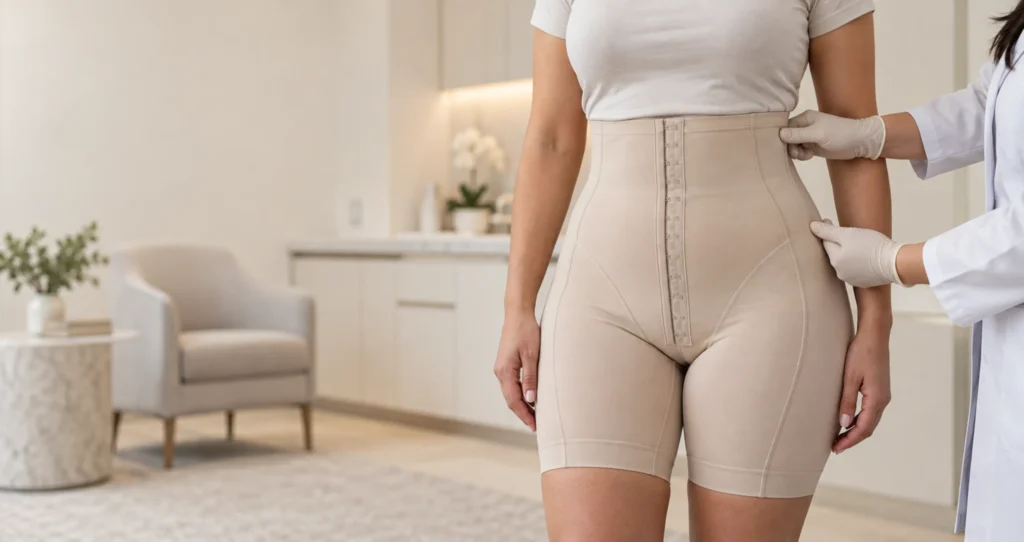
Why a compression garment may be recommended
A compression garment after liposuction is just one part of postoperative care, not a stand-alone way to determine the final body contour. For an overview of the procedure and recovery context, see Tunio’s earlier liposuction and sculpting article. Your own surgeon should explain the purpose and fit of the prescribed garment.
Following liposuction, some surgeons recommend a medical compression garment to provide even external support while postoperative swelling settles. Compression protocols differ by the body area treated and the surgeon’s technique. A garment is not a substitute for proper wound care, movement, hydration or follow-up. Scientific evidence about its exact benefits and ideal duration is limited and varies between procedures.
Fit matters more than maximum tightness
Garment choices need to reflect both the anatomical area treated and the individual recovery plan. Tunio’s general article about liposuction as a cosmetic procedure discusses the broader aims and limitations of fat removal, whereas the specific pressure and garment design should be decided during postoperative review.
A suitable garment should feel supportive without causing severe pain, impaired breathing, numbness, skin colour changes or deep constricting grooves. More pressure is not automatically better. Size can change as postoperative swelling evolves, so your care team may recommend adjustments. Do not double up layers or use an overly tight garment simply to speed up contour changes.
How long should you wear it?
An online recovery story is not a universal garment schedule. The site’s earlier piece on liposuction, body contouring and postoperative recovery offers additional background, but your operation type, wound condition and swelling should determine how long and how often you wear a medical garment.
There is no single wear schedule that suits every liposuction patient. Surgeons may recommend different daily wear durations and total weeks of use according to the treated site, amount removed, drainage, swelling and recovery progress. Ask for written instructions that specify when to remove the garment for bathing, wound care, and laundering. Never treat an online timeline as a replacement for your surgeon’s instructions.
Hygiene and skin checks during recovery
Keep the fabric clean and dry according to the manufacturer’s instructions and the clinic’s advice. Check accessible skin for rubbing, blisters, pressure marks that do not fade, or irritated incisions. If drainage is present, use only recommended dressings. A second approved garment can be convenient during washing, but purchasing another style should be discussed with your team.
Movement, travel and everyday activity
If you are comparing garment advice across body areas, Tunio’s separate discussion of knee liposuction shows how treatment goals differ by location. It is useful as site navigation, not evidence that knee and abdominal patients should follow the same compression, activity or recovery instructions.
Compression alone does not prevent postoperative blood clots. Early, gentle walking may be encouraged as part of an individual recovery plan, while intense workouts and heavy lifting may be restricted. Ask when it is safe to drive, return to work, travel by air or sit for long periods. A surgeon will consider your clotting risks and any need for additional prevention.
When to call the clinic or seek urgent care
Contact your clinical team for increasing swelling on one side, worsening pain, persistent skin breakdown, abnormal drainage or a poorly fitting garment. Seek emergency medical help for chest pain, shortness of breath, fainting or sudden severe leg swelling, as these can signal serious complications. Do not rely on the garment to manage symptoms that need medical assessment.
Questions to ask before surgery
Patients weighing different procedures can also review the clinic’s overview of aesthetic and body-contouring services to frame their consultation questions. The decision to proceed with liposuction and the specifics of aftercare should remain based on an individual surgical assessment rather than a promotional overview.
Which garment style suits the area being treated? What level of compression is appropriate? How many hours per day should it be worn? What signs mean the fit is too tight? How should incisions be handled when changing it? When will the fit be reassessed? Clear answers make recovery more manageable and reduce reliance on generic advice.
Direct Answer: Compression After Liposuction
A compression garment after liposuction is a supportive medical garment prescribed for some patients while treated tissue recovers. The purpose is generally to support the area and help manage postoperative swelling, but the appropriate design, pressure and wear schedule must come from the operating surgeon. A garment is not a device for losing weight or guaranteeing a perfectly smooth contour. The American Society of Plastic Surgeons explains that dressings and compression can be part of recovery and that patients should receive specific instructions about duration, incision care and activity.
Different surgical techniques, treatment areas and personal health factors lead to different plans. Excessive tightness, persistent pain, changes in skin colour or new numbness should not be treated as signs that the garment is working harder. They warrant a fit check and, in some cases, urgent assessment. A properly chosen garment should support healing without replacing movement, medication instructions, nutrition and professional follow-up.
What a Compression Garment Actually Does
A compression garment after liposuction applies controlled pressure to the treated region. In the days following fat removal, the tissue contains inflammatory fluid and may feel swollen, firm or bruised. A clinician may recommend external support while these changes settle. However, compression cannot determine precisely how the skin will retract or guarantee an even final result. Recovery reflects surgical technique, individual tissue characteristics, the amount and location of fat removed, skin elasticity and the body’s healing response.
Patients sometimes interpret a tighter garment as a stronger treatment, but pressure that is excessive or concentrated at an edge can be uncomfortable and harmful. The goal is appropriate, evenly distributed support rather than maximum force. Surgeons may choose a different design for the abdomen, flanks, thighs or arms because the body bends and moves differently at each location. Written instructions should explain the garment’s intended purpose, how to identify a problem and when it will be reassessed.
Why Swelling Changes Across the First Several Weeks
Swelling while wearing a compression garment after liposuction does not follow one predictable recovery timeline. In the early period, bruising and fluid changes may make the treated region look larger or less regular than expected. As healing progresses, swelling often reduces gradually, although some areas may remain firm, sensitive or temporarily uneven. The American Society of Plastic Surgeons describes recovery over weeks and notes that swelling can continue improving beyond the early period. Patients should not judge the ultimate body contour from the first few photographs.
Changes in posture, lighting, time of day, movement and garment fit can all change appearance. The process can be emotionally frustrating, particularly when patients expect an immediate result. A surgeon can explain whether the pattern fits expected healing or warrants an examination. Increasing pain, marked asymmetry or rapidly worsening swelling should not be dismissed as a normal part of waiting for the body to settle.
Choosing the Correct Design for the Treated Area
Choosing the right compression garment after liposuction means selecting a design suited to the anatomical area treated. Abdominal procedures may require a garment that covers the torso without rolling into the waist, while thigh treatment might need a design that stays in place during walking. The goal is not to select the most compressive item available online. Instead, the operating team should specify the coverage, size, fastening style and how the fabric should sit around incisions. Seams, zippers and edges can be problematic if they press directly against sensitive spots.
Patients who have difficulty bending, changing clothes or using the bathroom should raise these issues before the operation. A medically suitable garment still needs to be practical enough to wear correctly. The clinic should also explain whether an adjustable garment is preferable during the swelling phase and whether modifications are permitted. Shopping descriptions such as ‘high compression’ provide little useful information without matching the surgeon’s prescribed requirements.
How to Judge Fit Without Guessing
A compression garment after liposuction may feel snug, but supportive pressure should never become painfully constricting. When fitting it, ask whether the fabric applies even pressure, whether seams press into wounds and whether normal breathing and movement remain comfortable. Deep folds can concentrate pressure; an item that rolls down repeatedly may no longer distribute compression as intended. Persistent skin blanching, tingling, worsening numbness, severe discomfort or a sensation of trapped pressure require clinical advice.
If swelling changes and the garment feels too loose or too tight, do not independently add layers or cut structural panels. Ask the team to examine the fit and recommend a suitable adjustment. The appropriate amount of compression is not something a patient can reliably measure by how difficult the garment is to close. Professional fitting is particularly valuable when multiple regions were treated or when skin sensitivity makes ordinary clothing uncomfortable.
The First 48 Hours: Follow the Discharge Instructions
During the first 48 hours, instructions for a compression garment after liposuction may be provided alongside guidance on drains, dressings, prescribed medication, and mobility. Patients should know whether the garment may be removed temporarily and what to do if it becomes soiled. After surgery, some drainage or fluid staining may occur according to the technique used; the team should explain what is expected and what is not. Do not remove surgical dressings simply because a garment appears to be in the way.
If an incision requires inspection, follow the exact cleaning and dressing steps provided by the clinician. A friend or caregiver may be needed to help the patient change the garment without stretching painful areas. Ask the clinic for an emergency contact method before discharge. Sudden breathing difficulty, chest pain or fainting after surgery requires emergency assessment rather than a routine appointment. Those symptoms cannot be managed by adjusting compression.
Week One: Skin Care, Hygiene and Comfort
During the first week, the main tasks are usually following prescribed medication instructions, monitoring incisions and swelling, wearing any approved support correctly and moving as advised. A compression garment after liposuction can trap moisture if its fabric remains damp after bathing or sweating. Ask how often it should be changed and whether laundering could affect its elastic properties. Make sure approved dressings remain in place and are replaced according to the wound-care plan.
Avoid heavily fragranced lotions, essential oils or exfoliating products near healing incisions unless specifically cleared. After bathing, carefully follow the surgeon’s instructions for drying the skin and putting the garment back on. Rubbing or pulling forcefully across tender areas is unnecessary. If red pressure marks persist, the skin breaks down, or the garment causes sharp pain, tell the clinical team. Comfort measures are useful only when they support, rather than interfere with, the recovery plan.
Weeks Two and Three: Movement and Return to Work
Patients wearing a compression garment after liposuction may feel more mobile after the earliest recovery phase, but returning to work depends on more than the calendar. A desk job may involve less physical effort than lifting equipment, standing for long shifts or working outdoors in the heat. The American Society of Plastic Surgeons describes a gradual recovery process, with continued limits on exercise and activity during early weeks. Patients should ask whether their garment is compatible with the movements their job requires.
Long periods of sitting can be uncomfortable, and a garment that folds at the waist may need professional adjustment. Gentle walking may be encouraged, but recommendations for strenuous exercise or lifting should come from the surgeon. Being able to move comfortably is not proof that internal swelling has fully settled. Plan the commute, clothing and any available rest periods, and report new symptoms that appear after increasing activity.
Weeks Four to Six and Beyond: Adjustments Instead of Assumptions
There is no universal date when every patient should stop wearing a compression garment after liposuction. Some patients may be advised to wear a garment for several weeks, whereas others may need a different schedule based on the region treated and their surgeon’s technique. Publicly available guidance from the American Society of Plastic Surgeons offers examples rather than a prescription for all cases. Ask whether the garment should be worn overnight, whether a lighter garment is suitable later and what signs should trigger reassessment.
Continued swelling may make size adjustments necessary; buying multiple tighter replacements without clinical input is not a sensible substitute. Even after garment use ends, the treated area may continue changing. Patients should distinguish the end of a wear schedule from the end of the healing process. Long-term outcome assessment is best made at the follow-up intervals specified by the surgical team.
| Garment issue | What the article explains | What to check |
| Fit | Support should not cause severe pain, breathing difficulty or impaired circulation. | Ask your surgeon about the correct garment size and pressure. |
| Wear schedule | Recommended hours and duration can differ by procedure and patient. | Follow the individualized written plan, not an internet timetable. |
| Skin and hygiene | Rubbing, skin breakdown or new discomfort require attention. | Keep fabric clean and contact the clinic if symptoms worsen. |
Why More Compression Is Not Automatically Better

Online discussions sometimes suggest that tightening a compression garment after liposuction produces a better contour, but this claim oversimplifies postoperative recovery. That claim oversimplifies postoperative biology. Pressure concentrated at a zipper, waistband or folded seam may cause unnecessary irritation, while an ill-fitting garment may fail to support the region evenly. If a patient has pronounced swelling, the answer is not necessarily to tighten every fastener.
Worsening one-sided swelling, marked tenderness, colour changes or persistent deep indentations require assessment to determine what is happening. Additional foam pads, bandages or second garments should only be used when prescribed, because these accessories alter how pressure is distributed. Complications after surgery cannot be prevented solely by increasing compression. A responsible plan combines fit assessment with incision care, safe mobilisation and medical review. The purpose of garment use should be clear enough that the patient can explain it without relying on the idea that discomfort signals effectiveness.
Compression and the Risk of Blood Clots
A surgical recovery plan must consider venous thromboembolism, including deep-vein thrombosis and pulmonary embolism. These are serious complications that require appropriate risk assessment and prevention. A cosmetic compression garment is not equivalent to medical anti-embolism stockings or an individually prescribed clot-prevention strategy.
Patients may be advised to walk gently, avoid prolonged immobility or follow other measures depending on their health and procedure. Do not stop or start blood-thinning medication without approval. Signs such as significant new swelling or pain in one leg need prompt evaluation. Sudden chest pain, breathlessness, collapse or coughing blood are medical emergencies. Patients travelling long distances after an operation should discuss the trip in advance, including flight timing and mobility. The garment itself cannot make high-risk travel or activity automatically safe.
Sleeping, Sitting and Bathroom Practicalities
A garment may fit comfortably when standing but bunch when sitting or sleeping. Before returning home, practise opening fasteners safely if the team permits and ask how to manage bathroom visits without touching wounds unnecessarily. The patient may need help during the first days, especially after treatment of the abdomen, flanks or thighs. The appropriate sleeping position should be determined by the surgeon, who understands the treated areas and any other procedures performed.
Avoid improvised tight straps that press into the skin overnight. If the garment causes breathing discomfort, persistent numbness or pain that wakes the patient, seek advice. Ask whether particular pillows or positioning changes are appropriate, but do not assume that every online recovery photograph reflects a safe arrangement. A usable garment is one that supports healing while allowing essential daily activities to be managed without forceful pulling or repeated injury to the incisions.
Laundry, Replacement Garments and Fabric Hygiene
Keeping a compression garment after liposuction clean and dry is important when its fabric rests against sensitive postoperative skin. Follow both the manufacturer’s laundering instructions and the clinic’s advice about washing frequency. Harsh detergents or fabric softeners may irritate some people, particularly when the skin is already reactive. A second approved garment can make it easier to maintain hygiene, but the alternative should match the prescribed design and compression level.
Repeated hot washing or drying may affect elastic materials, so the recommended care method matters. If the garment develops rough edges, stretched panels or damaged fasteners, ask whether replacement is appropriate. Do not continue wearing a visibly damaged garment simply to complete an arbitrary number of weeks. If drainage or blood stains occur, confirm whether that is expected and whether the incision requires review. Hygiene supports recovery, but it does not substitute for medical assessment of skin irritation or infection.
Managing Heat and Sweat in Dubai
Dubai’s outdoor climate may make a compression garment after liposuction feel warmer, especially during commutes or periods of high humidity. Planning can reduce discomfort: arrange breathable outer clothing, avoid unnecessary exposure during the hottest part of the day and ask how to manage perspiration without keeping damp fabric against healing skin. A garment should not be removed for long periods outside the prescribed schedule merely because the weather is uncomfortable; instead, discuss practical adjustments with the surgeon.
Air-conditioned environments can help with comfort, but rapid temperature changes or sweating are not proof that a garment has lost effectiveness. Patients returning to outdoor work may require more recovery time or a modified activity plan. Stay hydrated according to medical advice, especially if medicines or other health conditions affect fluid needs. If heat exposure causes dizziness, confusion or significant discomfort, move to a safer environment and obtain appropriate medical care rather than tolerating symptoms in the name of recovery.
Why Surgical Area and Skin Elasticity Matter
The garment is only one influence on the postoperative experience. The abdomen, arms, back and thighs have different contours and movements, and their skin may respond differently after fat is removed. A person with reduced skin elasticity may not achieve the same surface appearance as someone with firmer tissue, even if both follow the garment instructions carefully. Liposuction addresses selected fat deposits; it is not a substitute for treatment of every cause of loose skin, cellulite or changes in body shape.
Patients should discuss these distinctions during informed consent rather than assuming compression can solve any irregularity. As swelling changes, the garment’s fit may change too, especially around curves or joints. A follow-up appointment can assess both the garment and the treated tissue. If a patient is dissatisfied early on, it may be too soon to judge the result, but that uncertainty should be discussed rather than dismissed.
Normal Bruising Versus Symptoms That Need Review
Bruising and swelling can occur after liposuction, but not every painful or discoloured area is harmless. Improving soreness that matches the prescribed recovery information is different from rapidly increasing pain, a spreading red area, fever or foul-smelling wound drainage. Skin that becomes unusually pale, dark or blistered under a tight section of garment may indicate pressure injury and requires medical advice. A sudden change in one leg, unexplained breathlessness or chest pain warrants urgent assessment.
Patients should know which contact number to use and when to seek emergency care rather than waiting for an appointment. Photographs may support a phone consultation, but a clinician may need to examine the area directly. Clear safety guidance helps patients avoid both unnecessary worry about expected bruising and dangerous delays when symptoms are genuinely concerning.
Questions to Ask About Garment Duration and Reviews
An effective postoperative discussion should establish the garment type, intended hours of use, expected total duration and reasons the schedule might change. Ask whether it should be worn while sleeping, whether it can be removed for bathing and whether a second garment is useful. Find out who will assess the fit if swelling changes. If the garment slips, folds or feels too tight, the team should identify a clear way to request reassessment. Also ask which skin symptoms or incision changes require an urgent call.
A written plan is more helpful than a vague instruction to ‘keep it on’ for a fixed period. If the surgeon changes the recommendation, write down the new schedule rather than trying to reconcile conflicting online accounts. Patients should understand that care decisions are based on their treatment and recovery, not on generic claims about maximum compression.
Comparing Surgical Compression With Ordinary Shapewear
Commercial shapewear may look similar to a compression garment after liposuction, but their intended purposes and fit are not necessarily the same. Fashion items are often chosen for appearance under clothing, while medical garments may be designed to cover specific treated regions and avoid pressure on sensitive areas. A high-priced garment is not automatically appropriate, and a low-cost substitute may distribute pressure unevenly. Do not assume that the tightest waist trainer provides the best recovery support.
Ask the clinic for specific design requirements, acceptable alternatives and whether seams, boning, zippers or rigid panels are safe near healing skin. If a garment was purchased independently, bring it to the postoperative review rather than deciding by how smooth the contour looks in a mirror. Suitability should be judged clinically and practically, not by marketing terms such as ‘instant slimming’ or ‘guaranteed sculpting’.
Photographing Recovery Without Misreading Results
Recovery photographs can be useful, but swelling, posture, clothing and lighting make early comparisons unreliable. A photograph taken immediately after removing a garment may show temporary pressure marks that are not the final contour. For consistent documentation, use similar lighting, distance, clothing and body position at intervals suggested by the clinic. Avoid photographing wounds for social media or circulating personal medical images when secure communication with the care team would be better.
Record relevant symptoms or activity changes alongside the image if there is a clinical concern. Do not judge the operation as a success or failure from a single early picture or from another patient’s edited before-and-after photos. Individual skin elasticity, the amount of fat removed and the extent of swelling all affect appearance. Ask the surgeon what changes can reasonably be evaluated at each review stage and which concerns require an examination sooner.
Recovery Planning for Travel and Returning Home
People who travel to Dubai for surgery need a recovery plan that extends beyond the procedure date. Arrange transport, accommodation, assistance with dressing changes and a realistic interval for postoperative assessment. Ask when it is medically appropriate to fly, especially if the journey involves long periods of sitting. A cosmetic garment does not replace movement advice or an individual clot-risk assessment.
Obtain written information about prescribed medicines and whom to contact if symptoms develop after leaving Dubai. Consider whether a local healthcare professional can review a wound if an urgent examination becomes necessary. Travel plans should be adjusted to the medical needs of recovery rather than expecting the body to meet a fixed return-ticket schedule. If a garment is difficult to remove or replace independently, arrange assistance before departure. Clear coordination reduces the temptation to improvise postoperative care in an unfamiliar setting.
Final Perspective: Supportive Care, Not a Shortcut
A compression garment after liposuction can be a useful part of a surgeon-directed recovery plan, but it should not replace discussions about wound care, movement, and follow-up. The goals are safe healing, comfort, appropriate movement, wound care, and realistic assessment as swelling resolves. Proper garment selection depends on the individual procedure and cannot be reduced to one standard size, pressure, or number of weeks for everyone. A patient should be able to identify which symptoms are expected and which need help, and should know how to reach the operating team.
More pressure does not guarantee better results. If the garment causes pain, skin damage, or breathing difficulty, reassessment is needed rather than more determination. The most reliable approach is to follow individual written instructions, attend planned reviews, and avoid promises that a garment alone will sculpt the body. Any final result should be assessed after sufficient healing, not immediately after surgery.
Compression Garment After Liposuction: Practical Summary
A compression garment after liposuction should be fitted and reviewed as one part of an individual postoperative care plan. Ask what body areas it must cover, when it can be removed, how it should be laundered, and which symptoms mean that the fit needs reassessment. It cannot prevent every complication, shorten recovery by a guaranteed number of days, or replace safe movement and wound care.
Patients should avoid tightening garments beyond instructions and seek urgent assessment for severe breathing symptoms, chest pain or sudden concerning leg changes. Written instructions from the treating surgeon take priority over a general online schedule.
Frequently asked questions
Does tighter compression produce better results?
Not necessarily; excessive pressure may harm skin or cause discomfort.
Can I sleep in a compression garment?
Only if your postoperative instructions specifically recommend it.
Can compression eliminate all swelling?
No. Swelling can persist for weeks or longer and results develop gradually.
Can I buy a standard shapewear garment instead?
Not without confirming suitability with your surgical team.
Next step: Discuss your individual concerns with a qualified clinician. For the related service and consultation information, visit https://www.tuniohairtransplant.com/liposuction-treatment-in-dubai/
Editorial note: Verify against live WordPress archive, unpublished drafts, Google Search Console, and current clinical guidance before publishing. Do not publish the proposed URL until checks are complete.
Clinical and Editorial Reference Notes
American Society of Plastic Surgeons — Liposuction recovery
American Society of Plastic Surgeons — What to expect after liposuction
These resources provide general background for editorial review. They do not certify the safety of an individual procedure or replace instructions from the operating clinician.