

Direct Answer: Recognising Early Changes
Early signs of male pattern baldness often include a gradually receding hairline, thinning at the crown and increasing variation in hair thickness across the top of the scalp. The process is usually slow rather than a sudden event. People researching early signs of male pattern baldness should compare changes over several months, not decide from a single mirror check. Because shedding and scalp conditions can resemble hereditary thinning, a clinician should confirm the diagnosis before any treatment decision. This is an educational guide, not a substitute for individual medical assessment.
Why Subtle Changes Matter More Than a Single Hair Count
A person can shed a visible number of hairs in the shower while maintaining stable density because growing follicles replace hairs that naturally complete their cycles. Another person may report little shedding but notice that the frontal hairline looks less defined every year. The difference matters: progressive miniaturisation changes the diameter and growth characteristics of susceptible hairs, so the scalp may become easier to see even without dramatic handfuls of fallen hair. Understanding the pattern requires attention to both hair distribution and scalp health. A clinician will also consider medications, recent illness, nutrition, inflammatory symptoms and the person’s age. Neither an online self-test nor a family photograph can diagnose androgenetic alopecia conclusively.
A Helpful Way to Interpret Hairline and Crown Changes
The temples and crown are common areas to notice androgenetic changes, but they do not always progress together. Some individuals notice a widening space around the crown swirl first; others see gradual recession at the corners of the hairline. Hair texture and curl pattern can make these differences more or less visible. Short hair, wet hair, a tight part or direct light may also alter how much scalp is apparent in photographs.
If the finding appears only in one picture, repeat it under comparable conditions before assuming progression. If it remains consistent over months, an assessment can clarify whether the pattern suggests hereditary hair loss or another condition. Severe itching, pustules, tenderness, smooth scar-like patches or abrupt extensive loss do not fit a simple routine explanation and should prompt medical review.
How This Guide Differs From a Procedure Page
This article focuses on recognising potential changes and knowing when to request a diagnosis. It does not estimate graft numbers, promise hair restoration, compare Dubai clinic prices or explain the technical steps of follicular unit extraction. These subjects belong to dedicated surgical and consultation pages. An educational article should help readers determine which questions to bring to a qualified dermatologist or hair specialist; it should not imply that everyone with early thinning needs a transplant. Some people benefit from monitoring, medical management or investigation of other conditions rather than surgery. An appropriate next step depends on the examination, medical history and the individual’s priorities.
What does early male pattern baldness look like?
The early signs of male pattern baldness, also known as androgenetic alopecia, usually develop gradually and may initially be difficult to notice. The first visible changes may be a receding hairline near the temples, reduced density at the crown, or finer hairs in areas that previously looked fuller. Because changes can be subtle, people often notice a difference in photos before they see obvious bald areas. A changing hairline is not always a sign of disease: a mature adult hairline can differ from an adolescent hairline.
Six early changes worth noticing
1. Temple recession: the corners of the hairline seem to move backward over time.
2. Crown visibility: more scalp shows around the whorl under consistent lighting.
3. Progressive miniaturisation: some hairs grow thinner and shorter than nearby strands.
4. Widening coverage gaps: styling the hair no longer conceals the same areas.
5. Family history: close relatives with patterned thinning can raise suspicion but do not determine an individual’s outcome.
6. Consistent change in photographs: a pattern across several months is more informative than one bad hair day.
How is it different from normal shedding?
Daily shedding is part of the hair-growth cycle. Unlike normal shedding, the early signs of male pattern baldness typically involve gradual changes in hair density and thickness around the temples or crown, rather than simply more hairs appearing in the shower. Sudden or widespread shedding, a patchy area, scalp inflammation, or hair loss after illness may indicate a different condition. These signs deserve clinical evaluation instead of self-diagnosis.
What causes the pattern?
For readers who want more detail on inherited follicle changes rather than the early warning signs themselves, Tunio’s existing guide to androgenetic alopecia covers the condition’s genetic and hormonal background. That separate resource provides useful context without turning this signs-focused article into a general treatment overview.
Genetic susceptibility and the influence of androgens, particularly dihydrotestosterone (DHT), contribute to progressive follicle miniaturisation in androgenetic alopecia. Genetics can come from either side of the family. Stress, nutrition and certain medical conditions may affect overall hair health, but they do not explain every receding hairline. Identifying the type of hair loss matters because management depends on the cause.
How to document changes without obsessing over them
Take a small set of photos of the front, temples, top and crown every two or three months. Use similar lighting, camera distance, hair length and hair condition. Avoid making decisions based on daily photographs: wet hair, harsh overhead light and different styling can make normal density look dramatically different. A clinician may compare photographs with a scalp examination and, when indicated, dermoscopy or appropriate tests.
When to see a hair specialist
A clinician can distinguish early signs of male pattern baldness from temporary shedding or inflammatory scalp disease, because similar visible changes may have different explanations. Arrange an assessment if thinning is progressing, a new patch appears, hair is falling out suddenly, or you have pain, scaling or redness. Evaluation is also reasonable when the change affects your confidence and you want to understand the options. A specialist can assess the pattern, family history, medications and scalp health before discussing suitable treatments. Treatment may include evidence-based medical options, watchful monitoring or, for selected stable cases, procedural assessment.
IN-DEPTH GUIDE: UNDERSTANDING EARLY CHANGES
Hairline recession and ordinary variation
Hairlines are naturally asymmetrical, so the left and right temples may not match perfectly. Compare changes over months rather than worrying about one photograph. A gradually receding temple hairline, especially alongside finer hairs, can be one of the early signs of male pattern baldness, although normal hairline variation should also be considered. Yet a more angular adult hairline can also be normal.
A clinician can examine hair-shaft variation and assess whether the pattern is progressing. It is not possible to diagnose androgenetic alopecia from a forehead measurement or a viral comparison chart. If you are uncertain, take consistent photographs and describe when you first noticed the difference. A useful consultation should address the actual pattern and possible alternatives, not sell a procedure solely because your hairline is higher than it was in adolescence.
How to recognise crown changes
The natural crown whorl can reveal scalp in perfectly healthy hair. Strong light, wet hair or a short haircut may exaggerate this. One of the early signs of male pattern baldness can be progressive crown thinning, where reduced hair calibre makes more scalp visible over time. Photographs should be taken at a similar height, angle and lighting after the hair dries. A stylist or family member may help take repeatable images.
A specialist may use magnification to investigate miniaturisation, inflammation or other scalp abnormalities. Do not decide that one photo proves baldness. Similarly, do not ignore abrupt circular loss, soreness or unusual scaling. Those symptoms can warrant assessment for causes other than inherited hair loss, and they may require different treatment.
Why individual strands change thickness
Among the early signs of male pattern baldness is progressive hair miniaturisation, in which susceptible follicles produce thinner and shorter hairs. This process is called miniaturisation, and it can reduce visual coverage even when many hairs are still present. It differs from simply finding strands in a brush or shower. A person can shed a normal number of hairs yet experience reduced density as the remaining strands become finer.
Conversely, temporary excessive shedding can occur without the characteristic temple-and-crown pattern. The appearance of a thinner strand does not by itself establish why it changed. Dermoscopic examination, distribution and history help a clinician distinguish likely causes. This distinction matters because products advertised for general hair strength do not necessarily address the mechanism of patterned loss.
Why hair shedding is not always patterned baldness
Stress-related shedding deserves a separate discussion from gradual inherited thinning. Tunio’s article about stress and hair loss explores that distinction and can help readers prepare questions for an appointment. Neither resource should be used to diagnose a condition based on stress alone.
Shedding occurs as part of the normal hair cycle, and its visible amount varies between wash days and hair lengths. A sudden wave of shedding after illness, significant stress or a major bodily change may suggest a different process from slow androgenetic thinning. Medicines, nutritional problems and scalp disease can also contribute. When shedding begins abruptly, ask about its timing and associated symptoms rather than assuming genetics explains everything. The clinician may consider a hair-pull test or targeted investigations when appropriate. Looking for a cause can be more useful than counting each fallen strand. Avoid buying multiple treatments before knowing which condition is present, since unplanned combinations can cause irritation and make it harder to evaluate results.
Family history and what it can tell you
Genes from both sides of the family can affect susceptibility. The familiar claim that hair loss comes only from the mother’s father is oversimplified. A family pattern may be informative, but the age of onset and severity vary widely among relatives. Someone without a known family history may still develop patterned thinning. A family photograph is therefore a clue, not a prediction. Tell your clinician whether relatives experienced similar hair changes, but focus just as much on your own timeline, distribution and scalp health. The purpose of discussing genetics is to inform assessment, not to make irreversible predictions about how your hair will look in ten years. Your choices should reflect current findings and realistic future possibilities.
Androgens and the DHT connection
Dihydrotestosterone, often abbreviated DHT, is an androgen involved in follicle miniaturisation in susceptible scalp regions. This does not mean that everyone with a receding hairline has unusually high circulating testosterone or automatically needs hormone tests. Follicle sensitivity and genetics both matter. Blood investigations should be driven by clinical history and the possibility of other diagnoses, not by an online checklist claiming to measure hair-loss severity. Ask a clinician what evidence supports the diagnosis and whether an investigation would change management. Treatment discussions may include medicines that affect androgen-related pathways, but their benefits, risks and suitability require individual medical advice. A blog cannot determine the right prescription or promise a specific response.
| Observed change | Possible explanation | Useful next step |
| Slowly receding temples | Hereditary miniaturization may be involved | Compare consistent photos and ask about scalp examination |
| Sudden shedding across scalp | A temporary hair-cycle response is possible | Review recent illness, weight change, medicine and symptoms |
| Painful or scaly patches | Inflammation or another scalp disorder may be present | Arrange prompt dermatologist assessment |
What a proper scalp examination involves
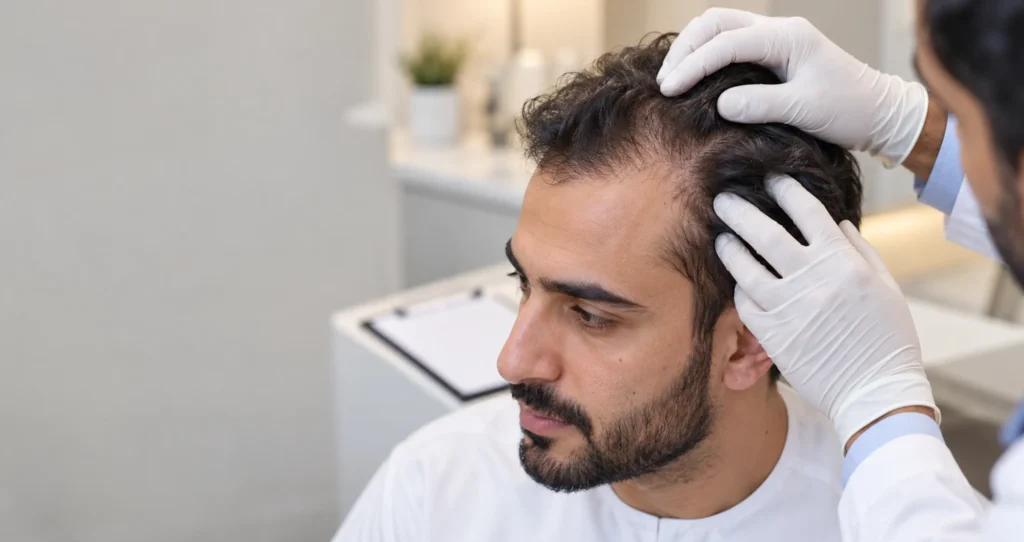
A good assessment begins with questions about onset, duration, progression, symptoms, family history and previous treatments. The clinician then examines the front, mid-scalp, crown and donor regions, often using magnification to look for differences in shaft thickness and signs of inflammation. If history suggests another cause, the plan may include laboratory testing or a specialist referral. Photographs can establish a baseline. The explanation should distinguish what is known from what remains uncertain. Ask whether the pattern is consistent with androgenetic alopecia, whether a second process could be occurring and which findings would justify follow-up. An examination is also a chance to discuss distress and expectations without feeling pressured into medication or surgery.
Hair loss in your twenties
The early signs of male pattern baldness may appear in your twenties, but developing these changes at a young age does not necessarily mean hair loss will progress rapidly. Some people have mild changes for years; others notice more substantial thinning. Because future loss is uncertain, management often emphasises diagnosis, monitoring and discussion of options rather than an aggressive surgical response. If you are young and worried, bring dated photographs and explain how the change affects daily life. Ask what treatment could realistically preserve existing hair and what ongoing care might involve. The conversation should also address whether your hairline is simply maturing. An appropriately cautious plan can avoid using limited donor hair before the long-term pattern is understood.
Hair loss after thirty or forty
A concern about thinning can arise at any adult age. Some men notice gradual recession much later than others, and previous stability does not rule out new changes. At the same time, sudden diffuse shedding or scalp symptoms should not automatically be labelled hereditary hair loss just because of age. A clinician will consider the pattern, medical history and speed of onset. For someone who has lived with a stable hairline for years, a new change may deserve particular attention to recent health events or medicines. Discuss your goals openly: preserving density, improving cosmetic styling or understanding procedural options are different objectives. The best plan should fit the diagnosis and the patient’s preferences.
Styling changes that mimic thinning
Wet strands clump together and reveal more scalp. Oily products can do the same, while overhead downlights cast shadows that enlarge visible gaps. Bleaching, heat damage and repeated tight hairstyles can cause breakage or traction that changes the outline of the hair. A shorter haircut can expose the crown swirl, whereas longer hair may conceal it. These effects explain why one mirror check or photograph can be misleading. When assessing progression, use dry hair, a similar length and a consistent viewpoint. Avoid manipulating the hair aggressively just to inspect it. If there is ongoing itch, pain, flaking or breakage, ask a professional whether a scalp or hair-shaft problem needs attention alongside any pattern loss.
Photo tracking without daily checking
Choose several views: frontal hairline, both temples, top and crown. Keep a simple note of the date, haircut and any treatment changes. Repeat the images about every two or three months rather than daily. Daily comparisons are vulnerable to lighting differences and can make uncertainty feel worse. A few reasonably standardised photographs can help document early signs of male pattern baldness over time and show a clinician whether a consistent pattern is developing.
If the scalp becomes inflamed, a patch appears suddenly or shedding increases dramatically, do not wait for the next scheduled photo session. The purpose of monitoring is to support a decision, not to create a perfect archive of every strand. Review the evidence as a whole, and be open to the possibility that the appearance has remained stable.
When a hair specialist can help
If you notice early signs of male pattern baldness, such as progressive hairline recession or reduced density, consider a specialist assessment, particularly when the pattern is unclear or symptoms such as pain, scaling or patchy loss are present. The clinician should ask questions, examine the scalp and explain whether the findings suggest hereditary loss or another condition.
If investigations are needed, they should have a clear purpose. A consultation can be useful even if you choose to do nothing immediately, because it provides a baseline and makes the options easier to understand. Bring current medications and supplement details, as these may be relevant. Seek timely help for sudden or rapidly worsening loss rather than treating it as a routine cosmetic concern.
Medical options to discuss
Once the type of hair loss is established, treatment discussions become more useful. The clinic’s broader article on hair-fall treatment options provides an introduction to that separate decision stage. This guide intentionally does not compare all treatment methods or recommend surgery for everyone with early thinning.
For a confirmed diagnosis of male androgenetic alopecia, a clinician may discuss established treatments including topical minoxidil and prescription finasteride where appropriate. These options differ in mechanism, expected results and potential side effects. Their suitability depends on medical history and patient preference. Some individuals instead choose observation, cosmetic styling or other measures. No treatment works identically for everyone, and a response may take months to assess. Request a balanced explanation of benefits, limitations, duration and what happens if treatment is stopped. Avoid combining products or changing doses based on social media testimonials. A meaningful plan includes follow-up and a way to recognise when a treatment is not suitable.
Hair transplantation is not the first step for everyone
A hair transplant can redistribute suitable donor follicles to selected areas, but it does not stop ongoing thinning of surrounding untreated hair. Donor supply is limited, and a responsible surgical plan considers future loss, hairline design, scarring and realistic density. Surgery may not be appropriate when the diagnosis is uncertain, a scalp disorder is active or loss is progressing unpredictably. If transplantation is discussed, ask how non-surgical management fits into the longer-term plan and what alternatives exist. Seek clarity about the team performing the procedure, follow-up and potential complications. People noticing early signs of male pattern baldness should not assume that hair transplant surgery is necessary simply because their hairline looks different from earlier photographs.
How to evaluate product claims
Advertising often focuses on dramatic before-and-after photographs, but results depend on diagnosis, technique, treatment adherence, lighting and hair length. Ask whether the evidence comes from controlled research or personal testimonials, and whether it relates to people with your specific condition. Words such as natural, powerful or guaranteed do not establish effectiveness or safety. Check whether a product contains medication and whether professional advice is recommended. Be especially cautious of products promising complete restoration within days. Hair biology moves slowly, and treatment outcomes vary. Reliable guidance usually acknowledges limitations, possible adverse reactions and the need for follow-up. It does not require you to commit immediately or purchase several products together.
What realistic improvement can mean
For some patients the primary goal is to slow progression, preserve existing coverage or make styling easier rather than regrow every strand lost over many years. This is worth discussing before treatment, because different expectations lead to different definitions of success. A clinician can help identify which changes are measurable and how long to wait before reassessment. Set a consistent baseline with images or a scalp examination, and avoid relying on the emotional impression of a single day. If treatment causes irritation or other side effects, report them instead of simply enduring them. Meaningful improvement should be weighed against convenience, cost, long-term commitment and medical suitability.
Scalp comfort and routine hair care
Gentle washing, appropriate treatment of dandruff or irritation, and avoidance of repeated hair pulling can support scalp comfort and reduce avoidable breakage. These steps do not independently reverse genetically driven miniaturisation. A balanced diet supports general health, but supplements should not be assumed necessary in the absence of a relevant deficiency or professional advice. If you use dyes, heat tools or styling products, pay attention to breakage and irritation. Do not confuse reducing cosmetic damage with curing inherited hair loss. A reasonable routine is one you can maintain consistently while you obtain an accurate diagnosis and discuss evidence-based options.
Common misconceptions answered
Many popular explanations of hair fall mix ordinary shedding with broader causes. For an additional site resource, see Tunio’s earlier overview of possible causes of hair loss, while checking specific health claims against current clinical advice because general articles cannot establish the cause in an individual patient.
Ordinary shampooing does not cause inherited pattern baldness; washing often reveals hairs that were already due to shed. Cutting hair makes its ends feel blunt but does not increase the number of follicles. Wearing a normal cap is not considered a cause of androgenetic alopecia, although tight traction or severe irritation may create separate problems. Stress can be associated with some shedding conditions but does not explain all gradual temple recession. Family history from either side can matter. A single photograph cannot predict lifelong progression. Separating these misconceptions from evidence helps people direct their attention toward useful actions: consistent observation, examination when needed and informed discussion of appropriate care.
A sensible appointment checklist
Before the visit, it may help to read Tunio’s questions to ask a hair-loss specialist and select those relevant to your symptoms. Bring the timeline and photographs with you, and ask the clinician to explain what can and cannot be concluded from the scalp examination.
Before your appointment, document when you first noticed early signs of male pattern baldness, which areas appear affected and whether your hair changes developed gradually or involved sudden shedding. Bring dated photos and list any prescriptions, supplements, scalp products, recent illnesses and relevant family history. Prepare questions about diagnosis, alternatives, realistic results, side effects, costs and follow-up. Ask whether further tests are actually necessary and what would change the recommendation. If surgery is proposed, discuss donor supply and future loss rather than focusing only on a graft number. Leave with a clear next step even if that step is monitoring. Informed consent and realistic expectations are more valuable than a rushed promise of instant regrowth.
Putting early signs in perspective
Early changes can be unsettling, but noticing them does not mean that extensive baldness is inevitable. Hair appearance varies with age, styling, lighting and health, and not every change requires treatment. When evaluating early signs of male pattern baldness, what matters is whether changes follow a persistent pattern and whether a clinician finds evidence supporting the diagnosis. Take measured photographs, observe relevant symptoms and seek professional help if the change progresses or concerns you. When treatment is appropriate, it should be based on diagnosis, suitability and realistic goals. The objective is not to make hair the centre of everyday life, but to help you make a calm, informed decision with the right information.
Frequently asked questions
Can male pattern baldness start in your twenties?
Yes, it can begin in early adulthood, although the onset and speed vary.
Does wearing a cap cause genetic hair loss?
Ordinary cap use is not considered a cause of androgenetic alopecia.
Can the process be stopped permanently?
No universal permanent solution applies to everyone; ongoing management often requires monitoring and an individualised plan.
Is a receding hairline always male pattern baldness?
No. A mature hairline and other types of hair loss should be considered.
Next step: Discuss your individual concerns with a qualified clinician. For the related service and consultation information, visit https://www.tuniohairtransplant.com/
Editorial note: Verify against live WordPress archive, unpublished drafts, Google Search Console, and current clinical guidance before publishing. Do not publish the proposed URL until checks are complete.
Evidence and Editorial Source Notes
American Academy of Dermatology (AAD), “What is male pattern hair loss, and can it be treated?”
American Academy of Dermatology (AAD), “Hair loss: Signs and symptoms.”
American Academy of Dermatology (AAD), “Hair loss: Diagnosis and treatment.”
American Academy of Dermatology (AAD), “Hair loss: Who gets and causes.”
These references support general patient education and diagnostic considerations; they are not endorsements of Tunio or evidence that a specific procedure is appropriate for an individual reader.
Keep reading


